研究成果藝廊
A new kind of telescope is set to search for mysterious fast radio bursts
圖片來源: Kai-Yang Lin/ASIAA
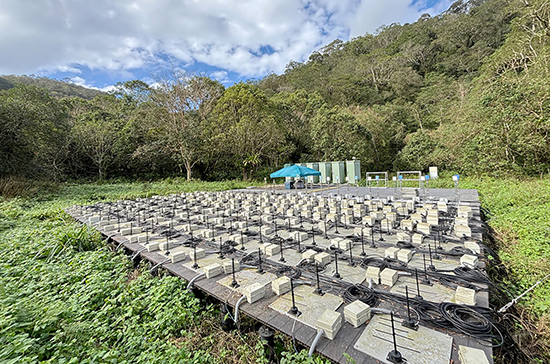
Taiwan's BURSTT array uses 256 radio antennas to monitor half the sky at once.
The classic design of a radio telescope is a massive dish, which gathers radio waves from space and focuses them onto an antenna above the dish.
The Bustling Universe Radio Survey Telescope in Taiwan (BURSTT), a humble-looking device nestled among the trees at the Fushan Botanical Garden south of Taipei, does away with the dish. Instead, it packs 256 antennas, shaped like miniature pine trees, into a so-called phased array to catch radio waves directly. Computers digitally combine the signals from the antennas, synthesizing multiple beams that can view roughly half of the visible sky at once. The array has no moving parts, but the beams can be steered electronically to view other parts of the sky.
Excerpts from 'A new kind of telescope is set to search for mysterious fast radio bursts' in Science (18 Jul 2025 By Dennis Normile)